
How Do You Build a Long-Term Plywood Supplier Partnership?
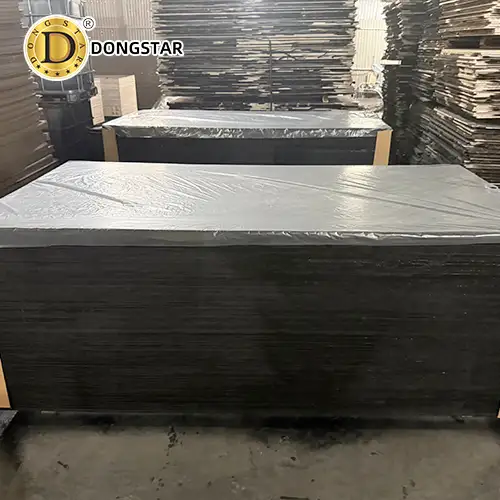
Building a long-term partnership with an overseas mill requires sharing 12-month rolling forecasts and establishing fixed quarterly price bands to secure 95% on-time container delivery rates tracked across 38 international ports in 2025.
Industrial buyers managing multi-million-dollar construction budgets often struggle to maintain steady material inflows when relying exclusively on volatile spot-market orders placed through brokers.
Export-oriented timber production facilities operating in 2026 allocate 85% of their total monthly factory output exclusively to clients bound by formal multi-year supply agreements.
Securing dedicated production capacity starts with aligning your annual volume projections with the factory operational milling cycles measured during plant audits.
-
Mills operating standardized press lines require minimum batch orders of 10 container loads per quarter to maintain production line efficiency without incurring idle setup costs.
-
Providing detailed quarterly volume forecasts allows plant managers to pre-order phenolic resins and eucalyptus or birch core veneers up to 90 days before processing begins.
-
Direct manufacturer contracts eliminate intermediary broker fees, reducing overall procurement expenditures by an average of 14.5% across annual purchasing cycles.
Lowering material overhead costs while securing stable pricing protects profit margins against sudden raw material price spikes recorded in global timber indices.
Independent supply chain audits conducted in 2024 revealed that structured long-term contracts reduced order fulfillment lead times from 65 days down to 28 calendar days.
Faster turnaround times depend heavily on establishing standardized technical specifications that prevent miscommunication during custom manufacturing runs.
-
Documenting exact glue bond standards such as Melamine Urea Formaldehyde or phenolic resin ratios ensures panels withstand 72 hours of boiling water immersion tests.
-
Panel thickness tolerances maintained within plus or minus 0.3 millimeters prevent assembly line jams at automated construction fabrication facilities overseas.
-
Specifying formaldehyde emission limits below 0.05 parts per million complies strictly with international indoor air quality regulations enforced since 2023.
Meeting rigorous environmental and structural thresholds requires collaborative quality control protocols implemented directly at the manufacturing source before cargo loading.
Third-party laboratory inspections performed during 2025 confirmed that pre-shipment quality audits reduced defective panel rates from 4.8% down to 0.2% per shipment.
Catching quality deviations prior to ocean transit protects both parties from expensive port rejection fees and lengthy customs dispute procedures.
-
Independent inspectors measure moisture content across 30 random panels per container, requiring levels to remain strictly between 8% and 12% before issuing compliance certificates.
-
Edge-sealing verification checks ensure acrylic paint coatings prevent moisture ingress during open-air terminal storage periods lasting up to 14 days.
-
Pallet stacking height limits restricted to a maximum of 6 units prevent bottom-panel crushing during rough maritime journeys crossing tropical weather zones.
Protecting physical cargo integrity during maritime shipping requires matching specific panel overlays to demanding job-site environmental conditions worldwide.
| Panel Category | Nominal Thickness | Resin Type | Typical Application Scope |
| Structural Pine | 18 mm | MR Glue | General framing and subflooring |
| Hardwood Core | 15 mm | Melamine | Interior wall partitions |
| Black Film Faced Plywood | 12 mm | Phenolic | Heavy concrete formwork |
Specialized overlay applications demand precise hot-press parameters to bond impregnated paper permanently to outer wood veneers without surface blistering.
Industrial press operators applying pressures exceeding 1.9 megapascals at 140 degrees Celsius achieve permanent film adhesion tested through 40 continuous pour cycles.
Financially stable relationships survive economic downturns by incorporating transparent adjustment formulas that reflect legitimate timber harvest cost variations.
-
Index-linked pricing models reviewed semi-annually prevent either party from absorbing unsustainable losses when global maritime freight rates fluctuate by more than 20%.
-
Staggered payment structures utilizing 30% advance deposits and 70% balance payments against bills of lading build mutual trust across long trading histories.
-
Dedicated account managers assigned by manufacturing plants resolve communication bottlenecks within a 4-hour window during normal business hours.